Gmail Certificate Not Valid
- Gmail Certificate Not Valid Proceed Anyway
- Gmail Certificate Not Valid Download
- Gmail Certificate Not Valid Name
Ran into an issue recently where Outlook was working fine, however, Android devices, particularly mobile phones, would throw an error that the certificate was invalid when configuring an Exchange mailbox via the Gmail app. The error was: Certificate not validThe Gmail app can't guarantee the security of this email address. Your messages would be at risk.When clicking Advanced we received more clarification that the certificate was not trusted.
Re: Cannot connect to gmail - 'invalid certificate' SOLVED I had already deleted the google certificate without getting further, but now I deleted cert8.db and key3.db under /.mozilla// because I was getting a bit frustrated.
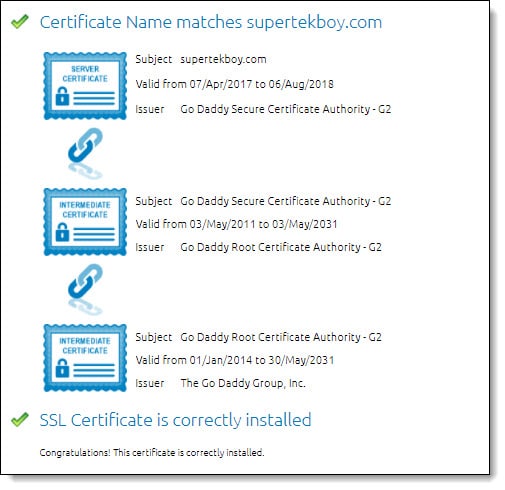
However, we could quickly see that the correct certificate was being presented to the Android devices and it clearly wasn’t an issue with the date. Certificate not trustedContact your email provider about this error, or proceed with username (unsafe).We then tested our certificate with DigiCert’s. This is a great tool to confirm that the certificate is installed correctly and that the certificate path is valid. You can check any certificate with this tool. It does not have to be a certificate issued by DigiCert. In our case, we were testing our GoDaddy certificate with this tool.We quickly found there was an issue with a missing intermediary certificate. It is typically required that when a certificate does not have a direct path to the root certificate authority that you must also install the certificates of any intermediary authorities to complete the certificate chain. In our case, we needed to install the missing GoDaddy intermediary certificate.When you download your certificate, most certificate providers bundle the intermediary certificates in the same zip file. However, most providers also publish a repository of all their intermediate certificates.
- According to Slashdot, Google's Gmail servers have been reconfigured to not connect to remote pop3 servers that have self-signed certificates. Thus Gmail users trying to get email from other.
- When connecting Gmail to third-party mail providers, the provider’s server must have a valid SSL Certificate from a trusted Certificate Authority (CA) installed on the POP3 SSL port (default: 995, see below). If a certificate is not installed or if there is a problem, you may not be able to access to your third-party mail account and messages.
You can find.DigiCert’s diagnostic tool gave us some good advice (and support articles) on common locations that intermediary certificates needed to be installed. However, in our case, we were publishing Exchange through a so we knew this was the best place to start. Adding intermediary certificates to a load balancer.
Note: This article provides the steps for a Kemp LoadMaster. However, the same principles apply to all load balancers.To check the presence of intermediary certificates on a Kemp load balancer, log onto the Kemp and navigate to Certificates & Security Intermediate Certs.
This screen will display any certificates currently installed on your Kemp load balancer. If no intermediary certificates are installed you will only see the option to Add A New Intermediate Certificate.In that case, click Choose File and select the intermediate certificate. In the Certificate Name field supply a name for the intermediate certificate. This name can not contain spaces. But you can use characters such as underscores or hyphens. Click the Add Certificate button.You will receive a popup that the certificate successfully installed. At this point, the certificate will now be displayed on the same page where you can add additional intermediate certificates.
This table can populate over time to show multiple intermediate certs. Adding intermediary certificates to IISIf you have a single Exchange server in your environment then the chances are you need to install the intermediate certificate on the Exchange server itself. You do this with the Certificates MMC snap-in. To do this:Click Start and type MMC.
From the search results select MMC to open the Microsoft Management Console.From the MMC console select the File menu followed by Add/Remove Snapin. Select Certificates and click Add. From the wizard select Computer account Local computer Finish. Click Ok.Back on the console expand Certificates (Local Computer) Intermediate Certification Authorities. Right-click on Certificates and select All Tasks Import from the context menu.On the Welcome page click Next.On the File to Import page click the Browse button and select your intermediate certificate. Click Next.On the Certificate Store page keep the default settings of Place all certificates in the following store and Intermediate Certification Authorities. This will place the intermediate certificate under the correct node.
Click Next.Click Finish. You will receive a prompt that the import was successful.
Gmail Certificate Not Valid Proceed Anyway

Click Ok to dismiss the notification.The certificate will then appear under Certificates (Local Computer) Intermediate Certification Authorities Certificates. Checking your workAt this point, you can retest the certificate installation with DigiCert’s. In the results, you should now see a chain that includes the intermediate certificate you just installed.Once we received this validation from the SSL checker we then retested our Android devices and were able to add an Exchange mailbox without any further errors.We would love to hear from you.
Have you seen any of these errors before? What did you do to fix it? Drop a comment below or come join the conversation on Twitter.
I've been sending and receiving mail via my ISP with no problems, with IMAP and SMTP, with SSL. Then last week I started getting errors while sending (but not fetching):Secure Connection FailedThe certificate for 'SMTP:xxx@smtp.xxx.com' may not be valid.Cancel / ContinueI choose Cancel, not wanting to send in the clear. I asked my ISP if something changed regarding their certificate, and they said that indeed it had expired and they have a new one.

Gmail Certificate Not Valid Download
I see that's the case when looking at page info on an iMac desktop browser on the https webmail page- the current certificate started last week.The problem is that my (1st generation) iPhone doesn't seem to want to upgrade to the new one. I've tried turning off, then back on, SSL for both SMTP and IMAP in the account's mail settings, hoping it would get the new one, to no avail.This doesn't seem to be a very unusual situation- a mail host's certificate expires and a new one goes into effect, so I'm surprised that I haven't been able to find any solution after searching online.
I've run the desktop Keychainapp, but don't even see the certificate for my ISP, FWIW. I ran the iPhone Configuration Utility as well, but don't immediately see any way to purge the old cert.Before trying a Restore on the phone, or just deleting the mail account and readding it, I wanted to post for a basic solution. Any suggestions appreciated.
1st generation iPhone, up-to-date with version 2.2. Details for future reference by anyone with similar problems.I'd seen mention of mailing a certificate to yourself as an attachment, then opening it in Mail and it will then prompt you to install. To get the cert, from a desktop I did$ openssl sclient -connect address.of.my.isp.com:587 -starttls smtpThis output the connection information as openssl connects, including the certificate. I saved it as foo.cert and mailed it, but Mail didn't give me an option to open it- it just showed an icon with the filename when I opened the message.I then saw mention elsewhere where a.cer extension was used, so I renamed it foo.cer, mailed it, and now Mail let me click on it. It opened a certificate install app (screenshots of the same screen can be seen at the URL below). Choosing Install resulted in a message that the authenticity of 'address.of.my.isp.com' cannot be verified.
Gmail Certificate Not Valid Name
I take that to be because it's self-signed, since when I'd run openssl above, one line in the output was 'self signed certificate in certificate chain'.Choosing Install Now resulted in a message that the root certificate couldn't be installed, with no further explanation. I then found the page at the URL below, which says that that means the certificate has previously been installed. Apple Footer.This site contains user submitted content, comments and opinions and is for informational purposes only. Apple may provide or recommend responses as a possible solution based on the information provided; every potential issue may involve several factors not detailed in the conversations captured in an electronic forum and Apple can therefore provide no guarantee as to the efficacy of any proposed solutions on the community forums. Apple disclaims any and all liability for the acts, omissions and conduct of any third parties in connection with or related to your use of the site.
All postings and use of the content on this site are subject to the.